High-Security Registration Plates (HSRPs) are mandatory for vehicles in India — and with increasing compliance requirements, scammers are exploiting this demand to trick vehicle owners into paying for fake booking services or counterfeit plates. Knowing the risks and how fraudsters operate is essential to protect your money, data and legal compliance.
Why HSRP Scams Are Increasing
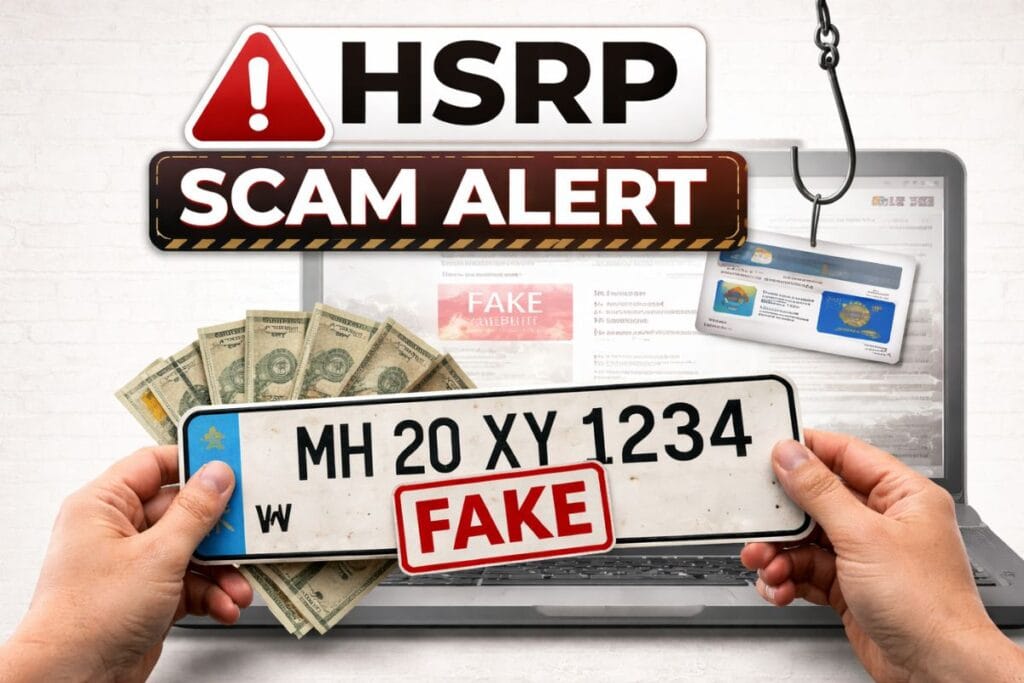
As more vehicle owners rush to install HSRPs, cybercriminals and fraudsters are exploiting this urgency. Many create fake websites, social media ads and phishing messages that mimic official portals. Their aim is to harvest sensitive vehicle and financial information or to collect money for plates that never arrive or aren’t legally valid.
For example:
- Maharashtra Transport Department reported multiple cases of fraudulent websites posing as HSRP booking platforms.
- Cyber police in Pune recorded victims losing money after clicking fake sites that appeared in search results.
- In Delhi, a cyber cell busted an online racket selling fake HSRPs with fraudulent UPI QR codes and arrested two individuals involved in the scam.
Common Scams & How They Work
1. Fake Booking Websites
Scammers build websites that look legitimate and promise quick HSRP booking. They often:
- Rank high on Google via ads or SEO tricks.
- Ask for your chassis number, engine number and contact info.
- Accept payment via UPI or online gateways that feed into scam bank accounts.
After you pay, you might receive:
- A fake confirmation message or receipt.
- No plate at all.
- A plate that doesn’t meet legal standards.
2. Phishing SMS and Messages
Fraudulent SMS, WhatsApp messages or social posts claim “quick HSRP service” with a link. Clicking it can:
- Lead to phishing pages that steal personal data.
- Prompt payments to accounts controlled by scammers.
3. Fake Vendor Claims
Some scams involve individuals claiming to be authorised vendors (e.g., posing as “official partners”), even showing fake certificates or logos. These sites might:
- Charge higher than official fees.
- Deliver non-compliant plates.
🚫 Risks of Falling for a Fake HSRP Service
❗ Financial Loss
You may pay for plates or services you never receive — sometimes hundreds or thousands of rupees.
❗ Identity & Data Theft
Personal and vehicle information (like chassis numbers and contact details) can be harvested and misused to:
- Clone your vehicle identity.
- Create fake registrations.
- Commit financial fraud.
❗ Legal and Penalty Issues
Driving with fake or non-compliant plates can lead to fines, seizure of vehicle or insurance complications during claims.
❗ No Government Verification
Only HSRPs issued by authorised vendors under government or transport department channels are legally recognized.
✅ How to Verify Legitimate HSRP Booking Channels
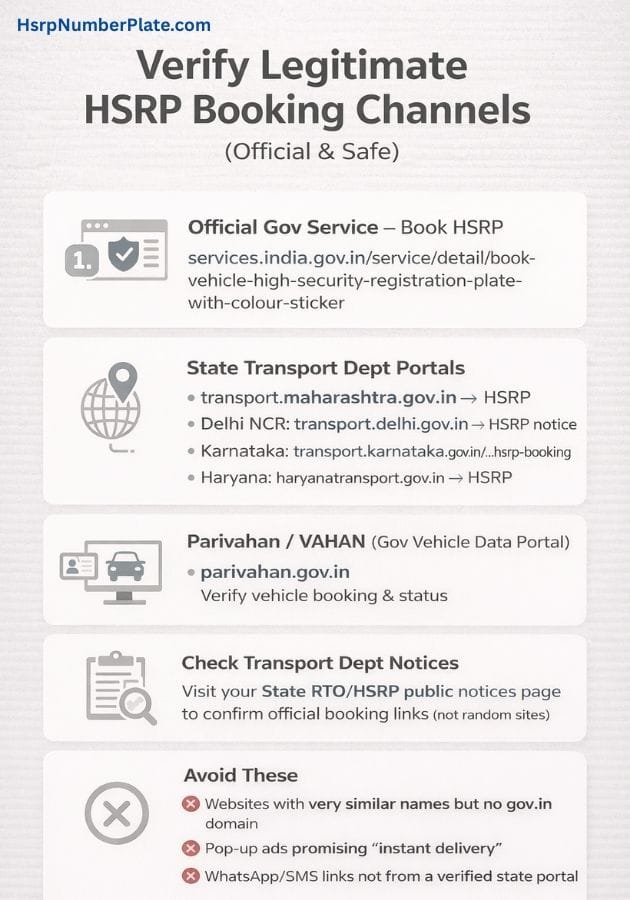
1. Use Official Transport or Recognised Portals
Only book through official state transport websites or government-linked portals. Common legitimate options include:
- State RTO portals with HSRP sections. (These Government websites ends with “gov.in” for almost states in India.)
- Recognised platforms like SIAM or authorised vendors like Rosmerta, FTA pages linked directly from transport department websites. But also check on official State Transport department portals again whether these portals/vendors are allowed for your State or not.
A simple rule: never trust random sites that pop up high in search without validation.
2. Check URLs and Security
Before submitting details:
- Look for https and a padlock icon in the browser.
- Avoid URLs with extra characters, unusual symbols, misspellings, or strange domain names.
- Dismiss sites that arrived only from ad clicks or unsolicited messages.
3. Ignore Unsolicited Offers
If someone calls, texts, or messages on WhatsApp offering to book HSRP for you without you initiating it, treat it as a red flag.
4. Contact Your Regional Transport Office (RTO)
When in doubt, call or visit your local RTO to verify the correct process and approved vendors.
5. Verify After Booking
If you make a booking:
- Save and confirm with the official VAHAN database status.
- Ensure your appointment and billing details match official records.
📌 Real Scam Examples & Cases
Here are real, reported incidents that highlight how serious HSRP scams have become:
📍 Maharashtra Fraud Complaint
The Maharashtra Transport Department filed a complaint with cyber police about six fake HSRP websites impersonating official services and cheating vehicle owners out of money.
📍 Pune Cyber Police Reports
Pimpri Chinchwad cyber police documented victims losing ₹1,500 and ₹4,000 after applying through fake sites that mimicked transport department services.
📍 Arrest in Bengaluru
Police arrested a 57-year-old for running a fake HSRP booking website, charging fees and either not delivering plates or overcharging victims.
📍 Delhi Cyber Cell Busts Racket
In June 2025, Delhi Police Cyber Cell arrested two men from Ghaziabad for operating scam HSRP sites, using paid ads and disguised bank accounts linked to UPI QR codes to defraud vehicle owners nationwide.
Don’t Get Scammed
HSRP compliance is important — but scammers will exploit confusion and urgency. Protect yourself by:
- Always using verified official channels.
- Ignoring unsolicited or suspicious links.
- Checking URLs and vendor credentials carefully.
- Reporting suspicious sites to authorities or cyber police.
When in doubt, stop and verify before entering any personal, vehicle or payment information — it could save you money, hassle, and legal trouble.