If your vehicle was registered before the Motor Vehicles (HSRP) amendments (vehicles manufactured/registered prior to April 1, 2019), you are required to get a High Security Registration Plate (HSRP) affixed. This guide explains: why HSRP is required, penalties for non-compliance, the step-by-step application process (state and national routes), typical costs, documents needed, expected timeline, and clear FAQs for Indian vehicle owners. Wherever rules differ by state or were recently updated, links to official portals and recent government / transport department documents are cited.
What is HSRP & why it matters
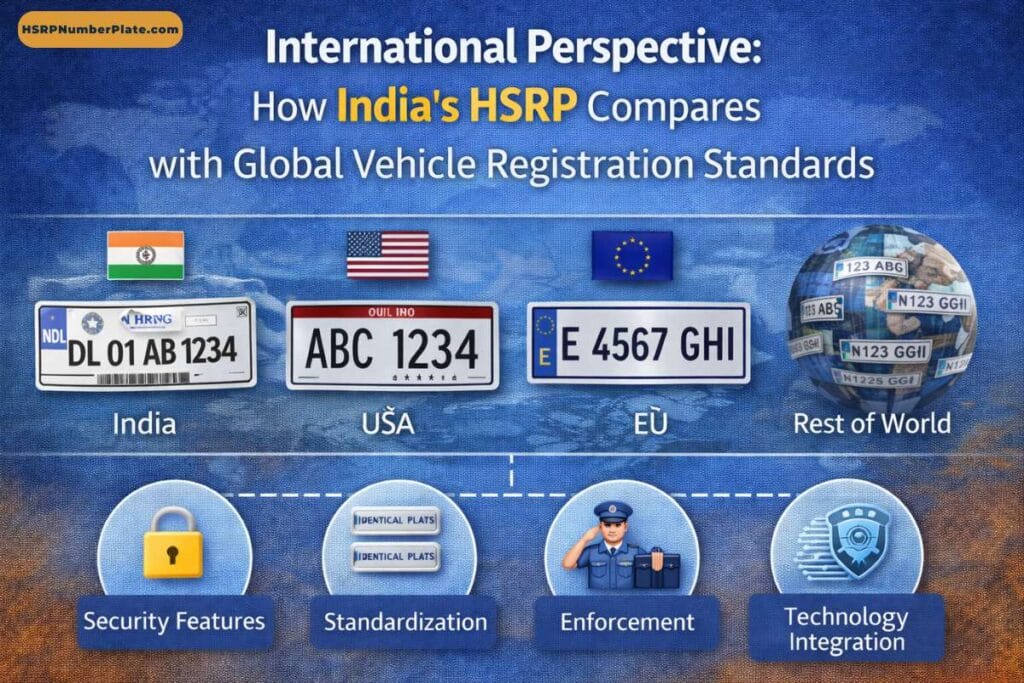
High Security Registration Plates (HSRP) are government-specified, tamper-proof vehicle number plates with a unique barcode/PIN, chromium hologram, and non-reusable snap locks — designed to reduce cloning/theft and ensure consistent registration identification nationwide. The mandate for pre-fitting and wider rollout has been made by the Ministry of Road Transport & Highways (MoRTH) and implemented through state transport departments and approved vendors. The core legal basis is the MoRTH HSRP notifications and related circulars.
Who must comply
- Vehicles manufactured or first registered before 01-Apr-2019 are required to be retrofitted with HSRP as per central rules and state orders. States run fitment programs (bookings/centres) for eligible vehicles; check your state portal or the national booking portals.
Penalties and enforcement
- Enforcement activity increased in late 2025 and into 2026. Several states began tougher checks and on-the-spot fines from ₹500 upwards for a first offence; repeated non-compliance or serious contraventions have attracted higher fines and, in some reports, penalties up to ₹2,000 and administrative restrictions (blocking certain RTO services until HSRP is affixed). Enforcement approach and fine quantum vary by state and may be updated — always check your state transport department notice.
- Besides fines, some states have signalled that certain RTO services (transfer of ownership, fitness certificates, registrations) may be withheld until proof of HSRP fitment is provided. Recent state SOPs spell out using receipts/appointment confirmations as temporary proof for limited RTO work.
Typical costs
Costs vary by state, vehicle type (two-wheeler vs car), and whether you choose home fitment or centre fitment. Typical components:
- HSRP plate (pair for cars / two-wheelers) — vendor/manufacturing cost.
- Colour sticker (state colour coding for registration year/vehicle category).
- Fitment charge — on-site or centre; home-fitment usually costs more.
- GST / vendor service fees.
Indicative amounts (examples reported in state rollouts):
- Two-wheelers: roughly ₹300–₹600 (total, including fitment & GST) in many states.
- Four-wheelers: roughly ₹6,00–₹1,500
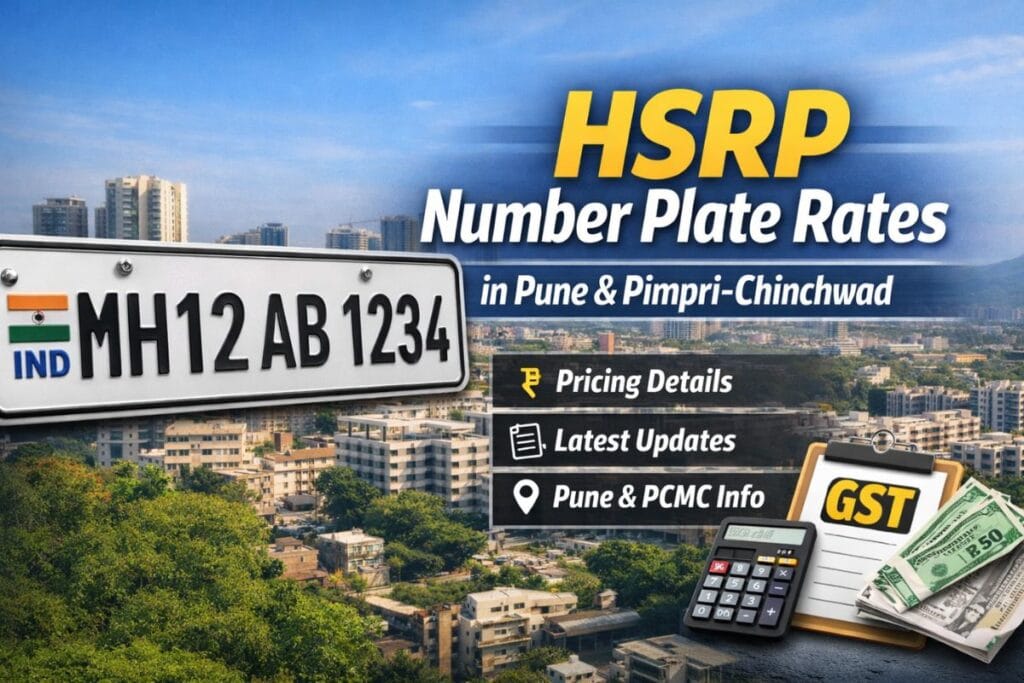
Some states have published exact home fitment charges — e.g., Pune/Rosmerta reporting home fitment charges in the ~₹678.50 (2-wheeler) and ~₹1,174 (4-wheeler) range (including GST) in 2025 reporting; actual rates depend on vendor and state. If you book through an authorised portal you will see the exact payable amount before confirmation.
Step-by-step application
There are two common routes: state transport / RTO appointed vendor portals and national booking portals (SIAM HSRP portal). Use the official channel for your state when available.
A — Prepare documents (before you start)
Typical required documents (scan/photocopy or have originals at fitment time):
- Registration Certificate (RC)
- Vehicle registration number, chassis number and engine number — often requested during online booking.
- Proof of identity & address — some states may only ask at fitment.
- Mobile number / email — for OTP, appointment confirmation, and e-receipt.
- Payment method — online payment (card/UPI/netbanking) or payment at centre as per portal.
(States occasionally ask for additional forms or a copy of insurance; check the portal for state-specific lists.)
B — Booking via official online portal
- Find your state portal / authorised portal: Use your state transport department HSRP page (for example: Maharashtra HSRP portal is https://transport.maharashtra.gov.in/ZoneWiseWebsiteRedirect.html ). Always prefer official links displayed on your state transport site.
- Enter vehicle details: registration number, chassis number, engine number, and owner name. Confirm details match your RC — incorrect entries cause delays.
- Select fitment type: centre fitment or home fitment (if available). Home fitment costs more but is convenient.
- Choose date, time & fitment centre / address: the portal will show available slots. Keep your appointment printout or e-receipt.
- Pay online: portal shows final payable amount (plate + sticker + fitment + taxes). Save or screenshot the payment receipt — it is proof of booking.
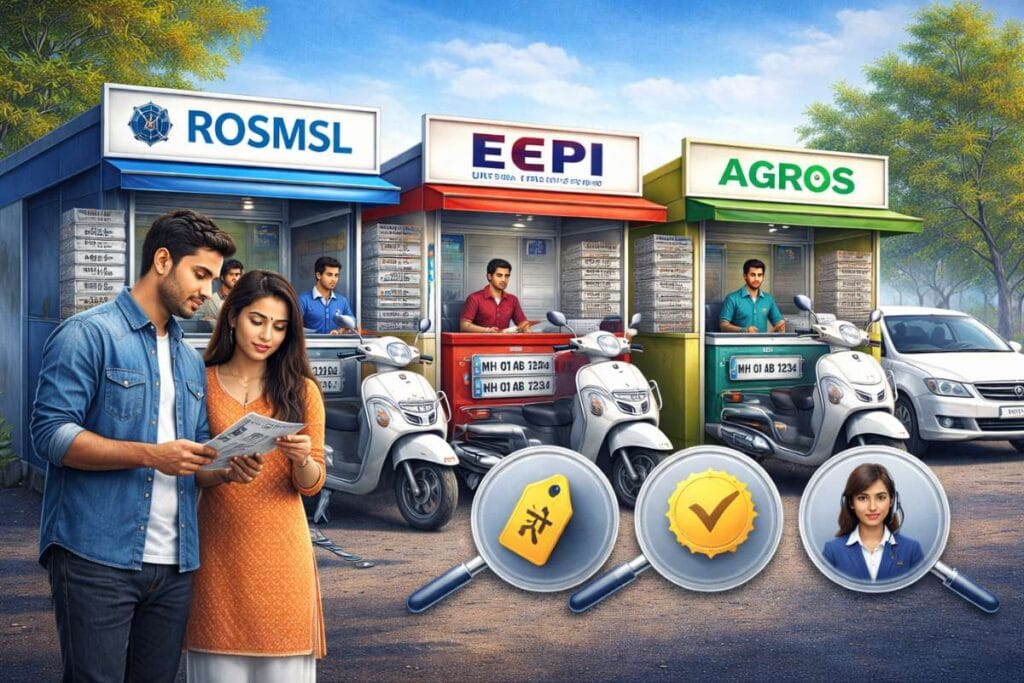
- HSRP affixation: arrive at the centre with original RC (and ID). If home fitment was booked, ensure the fitment team is authorised (vendor credentials should match portal). Do not accept unauthorised fitment vendors or duplicate plates.
C — What happens physically at fitment
- Officials verify the RC and chassis/engine numbers.
- Old plate (if any non-standard/fancy plate is present) will be removed and replaced by HSRP. HSRP is riveted with special snap locks; the hologram and unique PIN are recorded into vendor/state database. You receive a fitment receipt that includes HSRP code and vehicle details. Keep this receipt safe.
D — If your state allows in-person only or vendor takeover
- Some states use vendor-run camps or RTO-appointed centres. If online booking is not available in your area, go to the nearest authorised centre (check RTO website or call the transport department helpline for approved fitment vendors).
Timeline — how long each stage typically takes
- Preparation & booking: 10–20 minutes (online).
- Waiting for available slot: immediate to several days, depending on vendor capacity and state backlog. During peak enforcement windows backlogs may push slots out by weeks (reports in 2025 showed appointment waitlists in some urban centres).
- Fitment appointment: fitment at the centre normally takes 20–45 minutes. Home fitment can take longer depending on team logistics.
- Post-fitment updates: vendor updates national/state HSRP database on the same day — you should receive an SMS/receipt with plate PIN. Check your RTO’s acceptance of the record if you have further RTO work to do.
State differences & what to watch for
- States manage procurement and vendor appointments differently — fees, booking portals, and enforcement schedules differ. Always verify the official state transport website or official circulars for the latest SOPs and vendor lists. Maharashtra and some other states published SOPs and state-specific portals. Use the central MoRTH resources for the legal framework and state portals for operational steps.
Practical tips (do’s and don’ts)
- Do book only via official portals or RTO-approved vendors. Keep the e-receipt.
- Don’t accept “fancy” or self-made plates that imitate HSRP — these are illegal and can attract fines.
- Do verify the HSRP code/hologram and ask for the official fitment slip.
- Do keep scanned copy of RC and fitment receipt in phone for immediate proof if stopped.
- If there’s a problem (no show, vendor non-compliance), escalate via your state transport department’s grievance portal and keep transaction proof. Some states have set up complaint mechanisms for failed fitment appointments.
Frequently Asked Questions (HSRP for old vehicles)
Q1 — Is there a central deadline for all old vehicles to get HSRP?
A: There is a central legal mandate for HSRP under MoRTH, but deadlines and enforcement windows are managed by states. Over 2024–2026, several states set final deadlines and enforcement began in late 2025 / January 2026. Always check your state transport department notice for the latest deadline and enforcement status.
Q2 — What are the accepted forms of proof at a checkpoint before fitment?
A: The accepted proof is the fitment receipt/booking confirmation and the vehicle RC. If you have a booking appointment (with receipt), many enforcement officers accept that as evidence you have scheduled fitment — but this can vary by state and local enforcement. Keep originals and scanned copies.
Q3 — Can I use a private vendor or get the plate made elsewhere?
A: No. HSRP must be manufactured and affixed by authorised vendors approved under the MoRTH scheme. Unauthorised plates may be seized and fines may apply. Use only RTO/State-approved fitment centres or the national/state booking portals.
Q4 — I paid but the fitment team didn’t come / centre closed. What now?
A: Keep the transaction receipt and escalate through the state transport grievance process; many states permit rebooking or will investigate vendor defaults. If you face repeated vendor failures, notify RTO and demand refund or re-appointment. Reports during 2025 indicated such operational failures — governments promised case-by-case resolution.
Q5 — Will HSRP affect my RC or insurance?
A: HSRP is an addendum to the vehicle identity; it does not change RC details. Inform your insurer only if asked — however, keep the RC and insurance in order. HSRP helps enforcement and anti-theft tracking; it does not void insurance.
What HsrpNumberPlate.com recommends
- Don’t wait for last-minute enforcement windows — book as soon as possible through your state portal.
- Use official channels, keep receipts, and verify vendor credentials at the time of fitment.
- If you face problems (vendor no-show / wrong plate / denial of service), collect all transaction evidence and lodge a formal complaint with your RTO/state transport grievance cell.