The transition to High-Security Registration Plates (HSRP) in India is more than just a mandate for vehicle owners; it represents a specialized, regulated, and burgeoning industrial sector. Governed by stringent rules from the Ministry of Road Transport and Highways (MoRTH), the HSRP ecosystem is designed to be secure, standardized, and immune to tampering or counterfeiting. For entrepreneurs, investors, and automotive component manufacturers, this space offers significant potential, albeit within a tightly controlled framework. This guide provides an authoritative overview of the HSRP manufacturing industry, detailing the authorized players, the rigorous quality controls, and the business landscape shaping this critical sector.
Understanding the HSRP Mandate: The Genesis of an Industry
The HSRP industry exists because of a central government mandate. Introduced under Rule 50 of the Central Motor Vehicles Rules (CMVR), 1989, and reinforced by Supreme Court directives and subsequent MoRTH notifications, the HSRP scheme was designed to combat vehicle theft and crime. Unlike conventional number plates, HSRPs are:
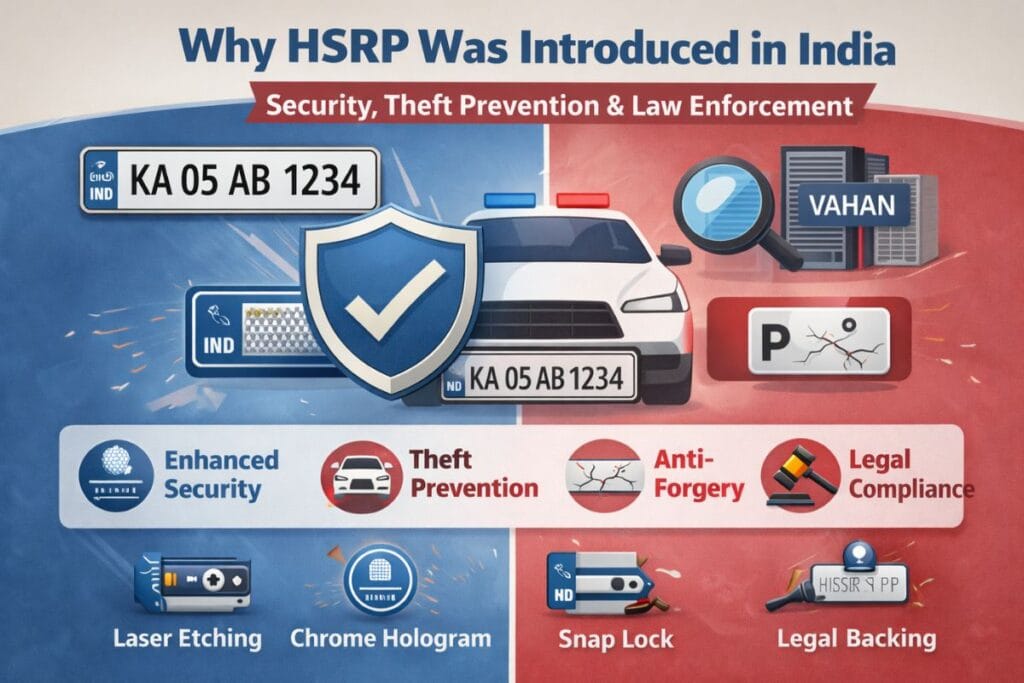
- Non-replicable: Made of 1.0 mm aluminum with a permanent, laser-branded, 10-digit PIN.
- Tamper-proof: Use snap-lock fixing mechanism that breaks if forcibly removed.
- Standardized: Have uniform font, size, color, and border as per CMVR.
- Traceable: Linked to the vehicle’s registration details in a centralized database.
This specific set of requirements created the need for a dedicated manufacturing and supply chain, distinct from the generic number plate industry. The government, to ensure integrity, does not allow vehicle owners or dealers to source plates from the open market. Instead, they must be procured from vendors authorized by the state’s Transport Department.
The Gatekeepers: Who Are the Authorized HSRP Manufacturers & Vendors?
This is the most critical aspect of the industry. The authority to manufacture and supply HSRPs is not freely granted. The process involves multiple layers of approval and certification.
The Central Certifying Agency: Automotive Research Association of India (ARAI)
Before any company can bid for a state contract, its manufacturing process and product must be certified by ARAI, Pune, or any other agency approved by the Central Government. ARAI ensures the plant, machinery, raw materials (including the reflective sheet and hot-stamp foil), and the final plates comply exactly with the standards prescribed in CMVR Rule 50 and the AIS 069 standard.
The Authorization Model: State-wise Tenders
Unlike a nationwide manufacturer license, authorization is granted on a state-by-state (or sometimes city/region) basis. Here’s how it works:
- State Transport Department floats a tender.
- Companies with ARAI Type Approval for their HSRPs bid for the contract.
- The selected bidder(s) is appointed as the Official Licensee/Vendor for that state/region for a fixed contract period (usually 5 years).
- This licensee is responsible for setting up fitment centers, partnering with dealers, managing the supply chain, and ensuring seamless service to vehicle owners.
Key National Players in the HSRP Manufacturing Sector
Several major automotive component and security solution providers have emerged as pan-India leaders, winning contracts across multiple states. Prominent names include:
- Shivam Locks & Security Solutions Pvt. Ltd: One of the earliest and largest players, holding licenses in numerous states.
- Utsav Safety Systems Pvt. Ltd: A significant manufacturer and supplier with a wide state-wise presence.
- Shri Lakshmi ACS Pvt. Ltd: Actively involved in HSRP supply and fitment across India.
- Shimmer Research Labs Pvt. Ltd: Another key authorized vendor for several state governments.
- Shapur Irani & Bros. (M/s. Irani Bros.): A long-standing player in the security plates market.
Important Note: The list of authorized vendors is dynamic and state-specific. A company authorized in Maharashtra may not be the vendor for Karnataka. Vehicle owners must always check their state transport department website or the official booking portal.
The Pillars of Integrity: Quality Control and Standards
The business opportunity in HSRP manufacturing is inextricably linked to an uncompromising adherence to quality. The entire system is built to prevent substandard plates from entering the market.
Mandatory Standards & Specifications:
- Material: 1.0 mm aluminum with specific tensile strength.
- Reflective Sheet: Must be a certified Grade A retro-reflective sheeting, ensuring visibility from 200 meters. It bears a “IND” watermark.
- Hot-Stamping Foil: Chromium-based, non-peelable foil with “IND” microtext.
- Laser Etching: A 10-digit Permanent Identification Number (PIN) must be laser-etched onto the bottom left of the plate.
- Snap Locks: Non-reusable, high-strength locks provided for fixing.
The ARAI Type Approval Process:
This is the gold seal. Manufacturers must submit their plates and processes to ARAI for exhaustive testing, including:
- Abrasion and corrosion tests.
- Reflectivity and chromaticity checks.
- Adhesion tests for the sheet and foil.
- Verification of laser etching and its durability.
- Vibration and impact resistance tests.
Only upon passing all tests does ARAI grant a Certificate of Type Approval, which is valid for the contract bidding process.
Ongoing Oversight:
Even after winning a contract, licensees are subject to audits by the State Transport Authority and must source materials from MoRTH-approved vendors of reflective sheets and foils. Any deviation can lead to heavy penalties and contract termination.
Business Potential and Market Dynamics in the HSRP Sector
The HSRP industry presents a unique, recession-resistant business model with a captive market, but it comes with high entry barriers and operational complexities.
The Scale of Opportunity:
- Massive Vehicle Base: With over 30 crore registered vehicles on Indian roads (and growing), the retrofitment market itself is enormous.
- Constant Inflow: All new vehicles sold require HSRP, ensuring a steady demand pipeline.
- Potential for Expansion: The mandate is still being rolled out comprehensively across all states and for older vehicles, indicating sustained demand for years.
Key Business Models & Opportunities:
- Principal Licensee: The apex opportunity—winning a state tender. Requires massive financial capability, ARAI certification, and operational scale to set up hundreds of fitment centers.
- Franchisee/Fitment Center Partner: Licensees often appoint local partners to operate fitment centers. This offers a lucrative small-to-medium business opportunity with lower capital risk.
- B2B Partnerships: Partnering with automobile dealers for pre-fitment on new vehicles.
- Ancillary Manufacturing: Producing the specialized raw materials—approved reflective sheets, hot-stamp foils, and snap locks—for the primary licensees.
Challenges and Considerations:
- High Capex: Setting up a certified manufacturing unit involves significant investment in laser etching machines, embossing machines, and quality control labs.
- Regulatory Dependency: The business is entirely dependent on government tenders and policies. Contract renewals are uncertain.
- Logistical Complexity: Managing supply chain and fitment networks across an entire state is operationally intensive.
- Pricing Control: The plate price is often regulated or stipulated in the tender, capping profit margins.
The Regulatory Framework: Navigating the Rulebook
Success in this industry demands mastery of the regulatory landscape:
- Central Motor Vehicles Rules (CMVR), 1989 – Rule 50: The foundational law specifying HSRP specifications.
- Automotive Industry Standards (AIS)-069: The detailed technical standard for HSRP.
- MoRTH Notifications: Periodic circulars that clarify, amend, or enforce the rollout timelines.
- State Transport Department Guidelines: Each state issues its own tender documents, operational guidelines, and pricing structures.
Compliance is non-negotiable. Unauthorized manufacturing or selling of counterfeit HSRPs is a punishable offense under the Motor Vehicles Act.
Conclusion: A Sector Built on Security and Standards
The HSRP manufacturing industry in India is a textbook example of how a public safety mandate can catalyze a specialized, technology-driven industrial segment. It is not a free-market arena but a public-private partnership model where the government sets the rules, and certified private players execute the supply. For businesses, the opportunity is substantial but is gated by rigorous quality certifications, significant capital, and adept navigation of government procurement processes.
For the nation, a robust HSRP industry is the backbone of a safer, more secure vehicle identification system. As India moves towards complete adoption and eventually integrates HSRP with RFID technology for electronic toll collection and law enforcement, the role of these authorized manufacturers will only become more central and technologically advanced. The future of this industry is inextricably linked to the future of automotive security and intelligence in India.
Disclaimer: This article is for informational purposes. The list of authorized manufacturers is indicative and subject to change. Readers are advised to verify the current authorized vendor for their region with their respective State Transport Department before procuring an HSRP.