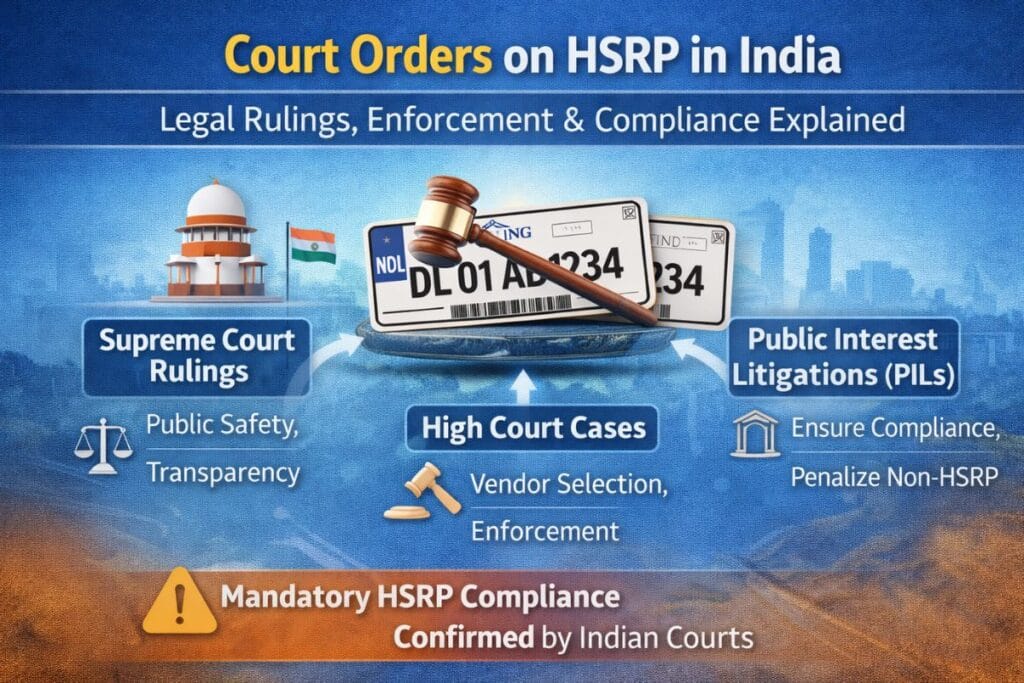
In recent years, vehicle registration regulations in India have undergone major reforms to improve road safety, reduce vehicle-related crimes, and standardize identification systems. One of the most significant changes has been the introduction of High Security Registration Plates (HSRP).
Many vehicle owners still use traditional number plates and are unaware of how they differ from HSRP. Understanding this difference is important because HSRP is now mandatory in most Indian states.
In this article, we explain in detail the key differences between HSRP and normal number plates, helping you make informed decisions and stay legally compliant.
What Is an HSRP (High Security Registration Plate)?
An HSRP is a government-approved, tamper-proof vehicle number plate designed with advanced security features. It is issued by authorized vendors under the supervision of the Ministry of Road Transport and Highways (MoRTH).
HSRP plates are standardized across India and are linked digitally with the vehicle’s registration database.
Key Features of HSRP:
- Made from aluminum alloy
- Laser-etched unique identification number
- Chromium-based hologram
- Hot-stamped reflective film
- Non-removable snap lock
- Color-coded third registration sticker
What Is a Normal Number Plate?
A normal number plate refers to traditional plates made by local vendors or private workshops without government authorization.
These plates are usually customized in size, font, color, and material. While they were commonly used earlier, most of them do not meet current legal standards.
Common Features of Normal Plates:
- Made from plastic, steel, or acrylic
- No security hologram
- No laser code
- Easily removable
- Non-standard fonts and designs
- Not digitally linked to government systems
Major Differences Between HSRP and Normal Number Plate
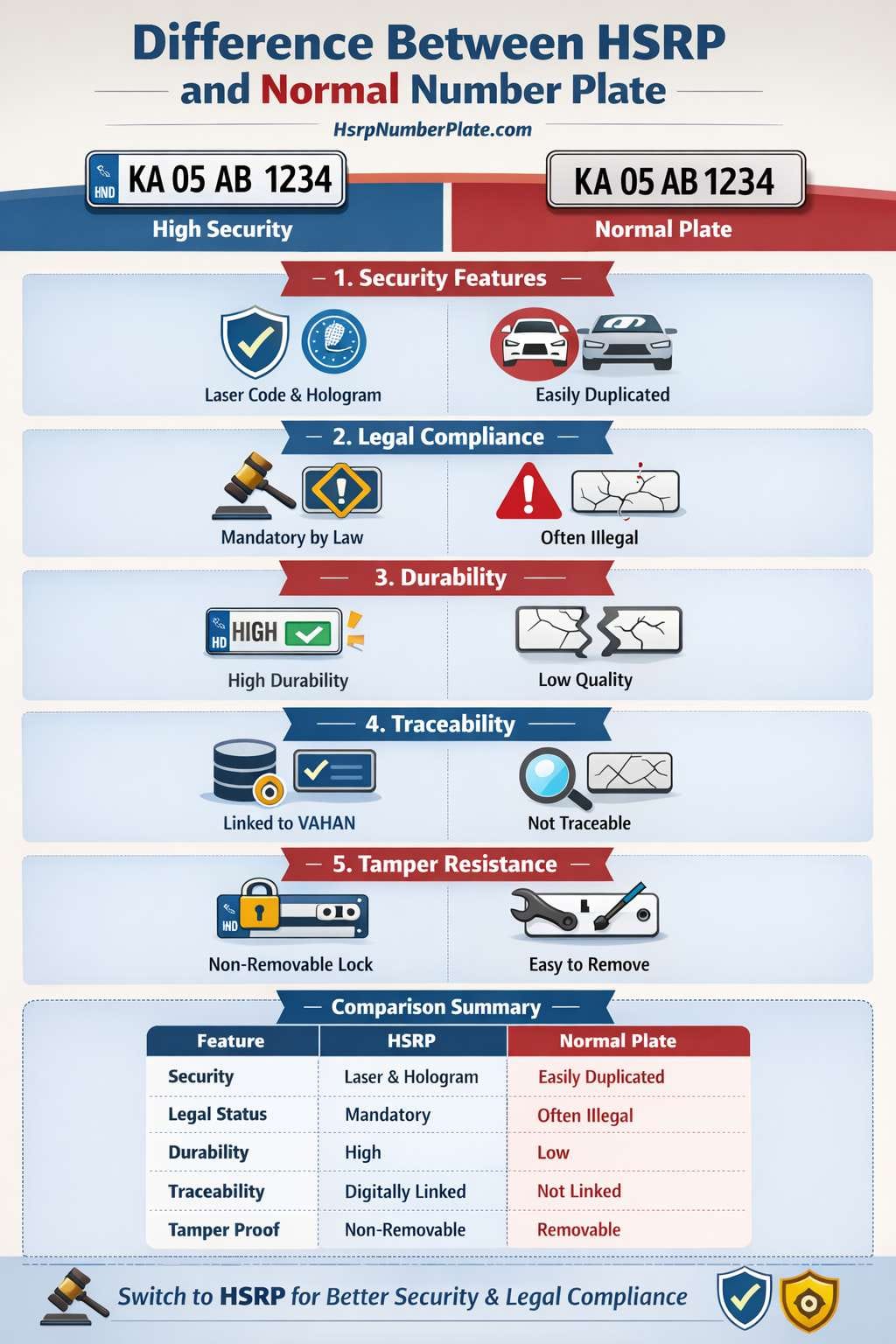
Let us now examine the five most important differences.
1. Security Features
HSRP:
HSRP plates come with advanced anti-theft and anti-tampering features. Each plate has a unique laser code and hologram that makes duplication extremely difficult.
Normal Plate:
Normal plates do not have any built-in security features. They can be easily duplicated, modified, or replaced without detection.
Result:
HSRP offers superior protection against vehicle theft and fraud.
2. Legal Compliance
HSRP:
HSRP is mandatory under Indian law for most vehicles. Vehicles without HSRP may face penalties, challans, or even seizure in some states.
Normal Plate:
Most normal plates do not comply with MoRTH guidelines and are considered illegal in many regions.
Result:
HSRP ensures full legal compliance.
3. Durability and Quality
HSRP:
HSRP plates are made from high-grade aluminum with reflective film that resists fading, rusting, and weather damage.
They maintain visibility even in low light conditions.
Normal Plate:
Normal plates are often made from low-quality materials that crack, fade, or peel over time.
Result:
HSRP offers longer lifespan and better visibility.
4. Traceability and Database Integration
HSRP:
Each HSRP is linked to the VAHAN database. This allows authorities to track vehicle details instantly.
In case of theft, accidents, or violations, vehicles can be identified quickly.
Normal Plate:
Normal plates are not digitally traceable. Law enforcement must rely on manual checks.
Result:
HSRP improves law enforcement efficiency.
5. Installation and Tamper Resistance
HSRP:
HSRP plates are fixed using non-removable snap locks. Once installed, they cannot be removed without damage.
This prevents unauthorized replacement.
Normal Plate:
Normal plates are attached with screws or bolts, making them easy to remove or replace.
Result:
HSRP minimizes illegal plate replacement.
Comparison Table: HSRP vs Normal Number Plate
| Feature | HSRP | Normal Number Plate |
|---|---|---|
| Security | High (Laser + Hologram) | Low |
| Legal Status | Mandatory | Mostly Non-Compliant |
| Durability | High | Low to Medium |
| Traceability | Digitally Linked | Not Linked |
| Tamper Proof | Yes | No |
Why You Should Switch to HSRP
If your vehicle still has a normal number plate, switching to HSRP is strongly recommended. It helps you:
- Avoid traffic fines
- Protect your vehicle from theft
- Follow government regulations
- Improve resale value
- Support national security systems
How to Apply for HSRP Online
You can apply for your HSRP through authorized portals or official state websites. The general process includes:
- Enter vehicle registration details
- Select plate type
- Book installation appointment
- Make online payment
- Visit fitment center
Always choose government-approved vendors only.
Final Verdict
The difference between HSRP and normal number plates goes far beyond appearance. HSRP represents a modern, secure, and legally compliant identification system, while normal plates are outdated and risky.
If you want peace of mind, legal safety, and better vehicle security, HSRP is the clear choice.